I just finished a massive project producing the multimedia for the Harvey B. Gantt Center‘s annual Jazzy Holiday Luncheon. For the project, I got to interview a number of amazing people, including Harvey Gantt himself, Dr. Henry Louis Gates as well as many others.
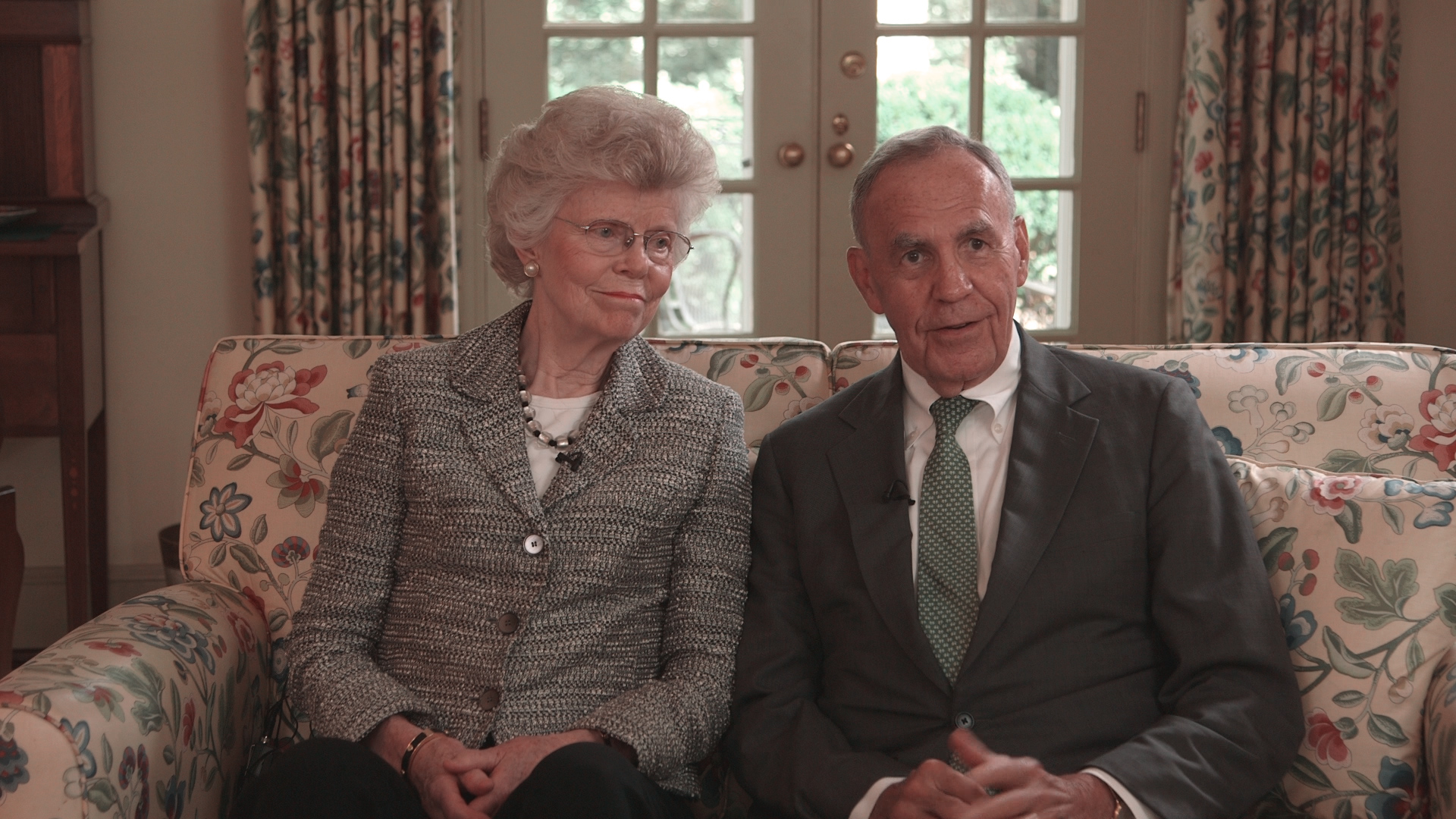
One of the videos I produced was a profile piece on Sally and Russell Robinson – two influential community leaders and arts patrons from Charlotte – who were one of the Gantt Center’s honorees at the luncheon. Like most projects I work on, the majority of what we shot did not relate to the story I was trying to tell about them and was thus cut from the finished piece. One excerpt from my interview with the Robinsons, however, that did not make it into their final piece I had to share. In it, Russell Robinson recounts a traumatic experience he had growing up in Charlotte, NC when he and another white child started playing with two African American children in their neighborhood in the 1930s and were confronted by the police.
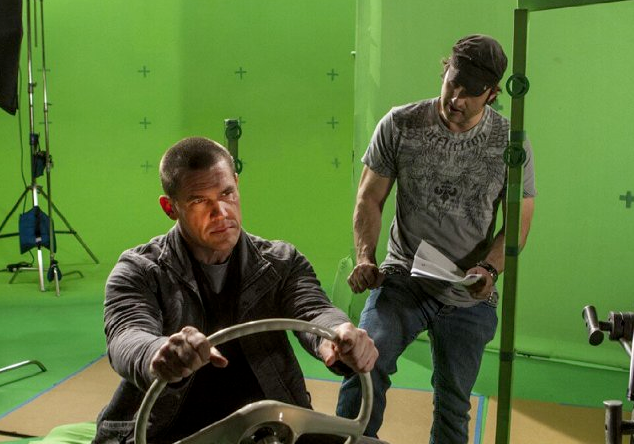
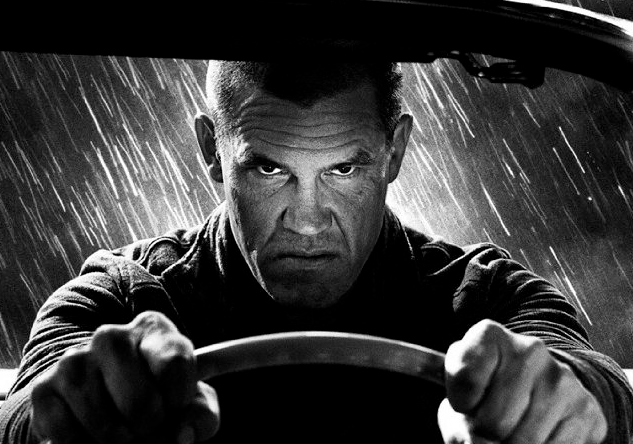
The possibilities that green screen compositing offers filmmakers are endless. Take a look at how the co-director of the soon-to-be-released Sin City sequel, Robert Rodriguez, does it.
I’ve interviewed a lot of people on camera – probably hundreds at this point. They range in length of time and depth, but the fact remains: I’ve asked a lot of people questions literally on the record.
Only a tiny fraction of what is recorded, though, makes it into the final cut of a 2-3 minute video that I produce or edit for my clients. And that’s a travesty because people raise lots of interesting points when I interview them that either don’t pertain to the narrative I’m crafting, or in some cases it just takes an interviewee too long to get to the point.
So today I am posting the first video from a new series that I’m calling BonusCuts in which I will upload interesting video excerpts that don’t make it into the final cut of my videos. The first segment comes from an interview with fabric designer Wesley Mancini. You can watch the finished version of the video that we produced about Wesley for McColl Center for Visual Art from which this interview excerpt was pulled.
I flew out to Los Angeles for my first time last Wednesday for a weeklong visit to see old friends who had moved out there for work, learn a little bit about the city and feel out the possibility of moving there myself. It was a great trip – full of new discoveries, good times with friends and a whole lot of introspection.
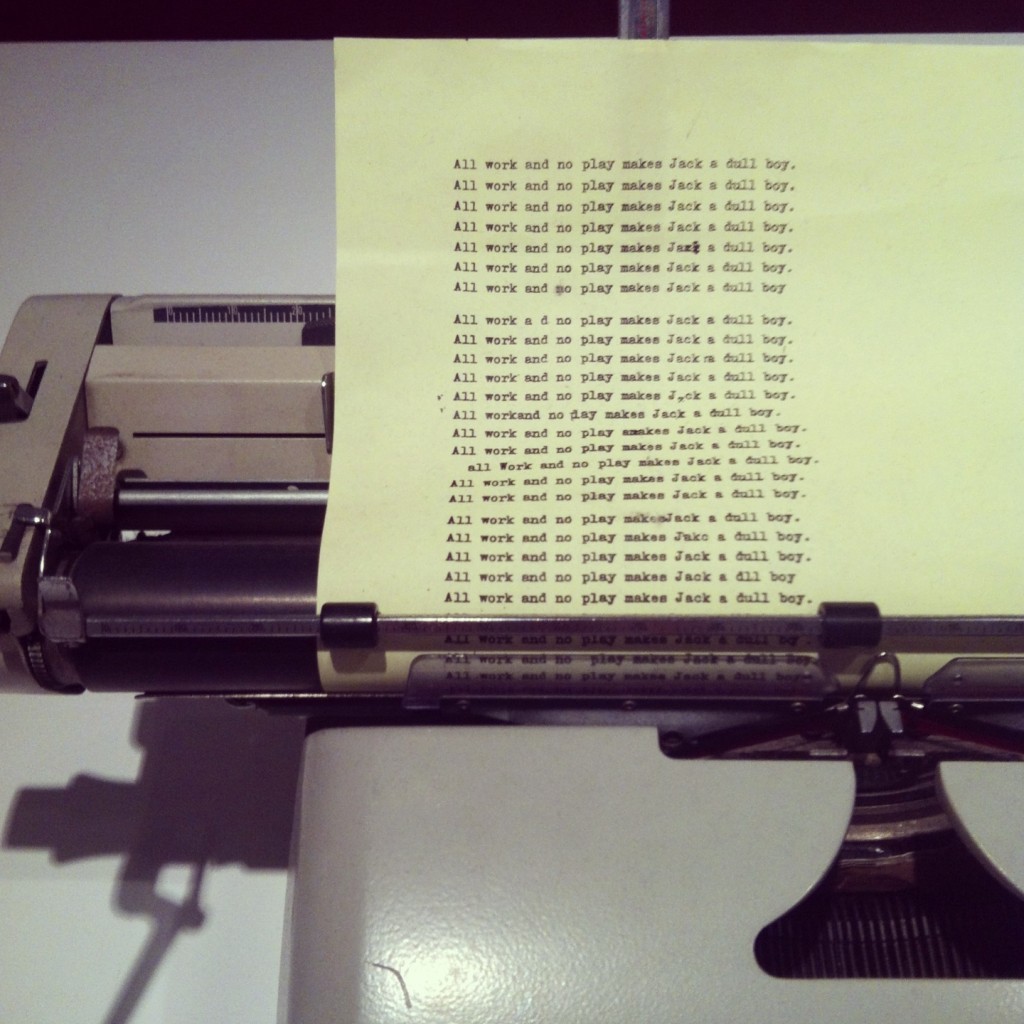
Prop from ‘The Shining’ at the Stanley Kubrick Retrospective at the LACMA
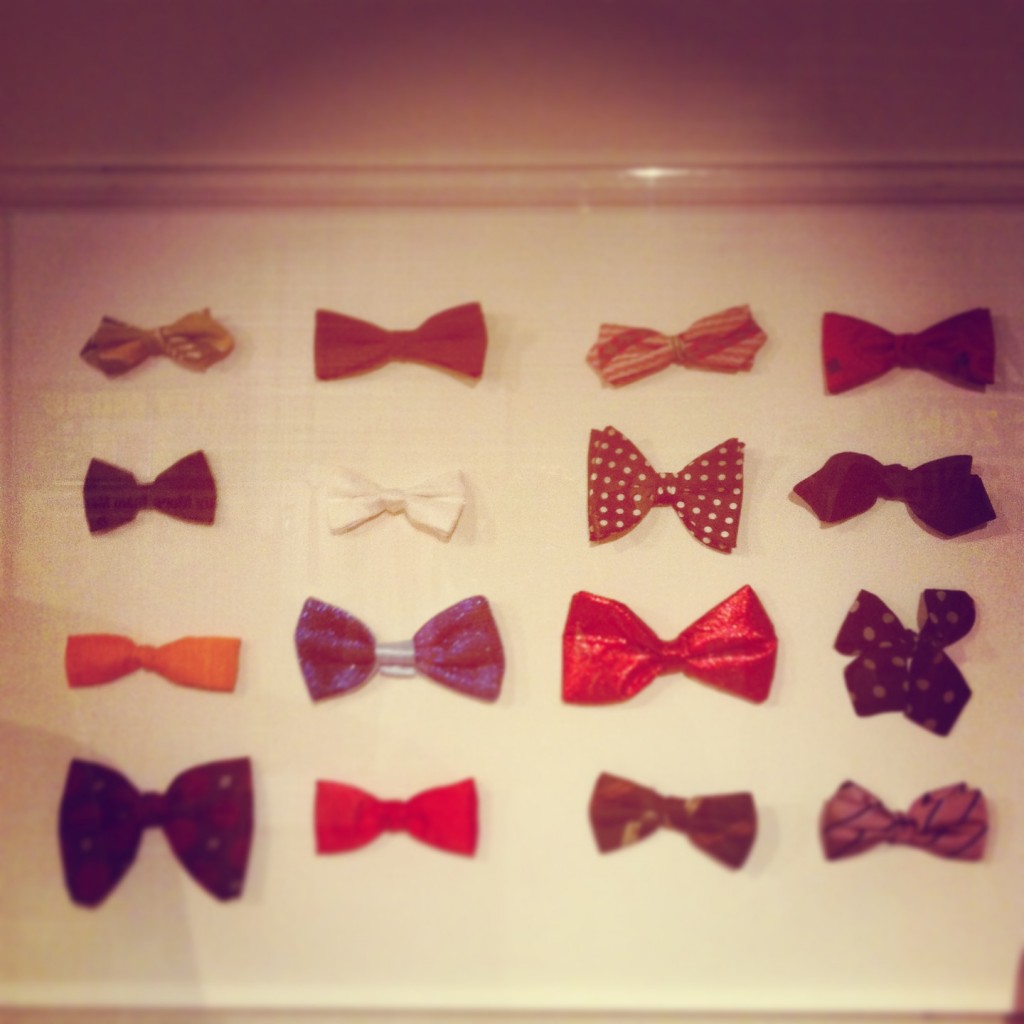
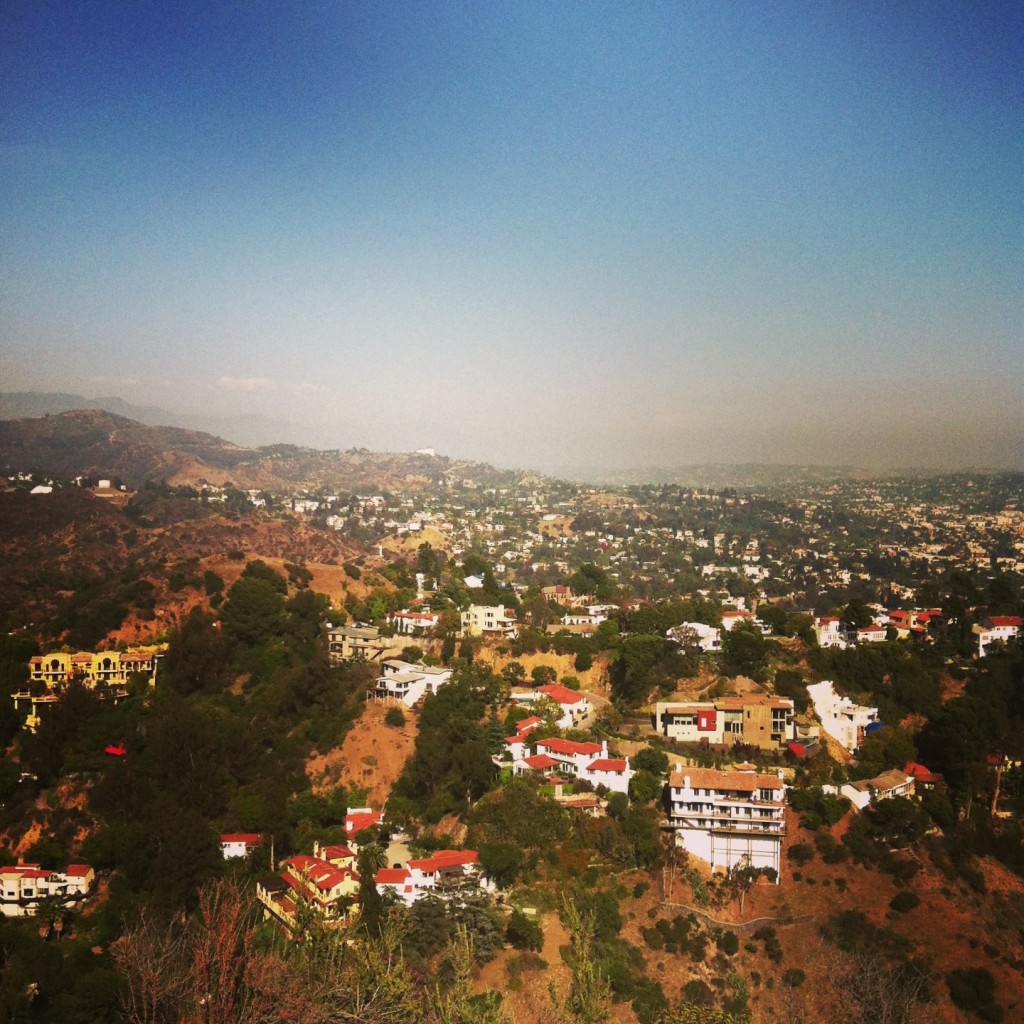
I spent the first few days doing some of the traditional touristy stuff. I visited the LACMA where I saw some of my favorite contemporary artists’ work on display and walked through the Stanley Kubrick retrospective. I went to the Paley Center for Media where I browsed a collection of Steve Urkel’s bow ties as well as some original Bugs Bunny and Animaniacs sketches. I took a stroll through Runyon Canyon to get a view of the greater Los Angeles area from up high (which was helpful for navigational purposes). And of course, I strolled along the Walk of Fame on Hollywood Boulevard.
The entertainment industry permeates the whole town. Signs on buildings and parking lots that read “Available for Filming” are a common sight. Most of the people I met – even out at bars and restaurants – worked in the industry. And everywhere I turned either looked like or actually was a location from a movie.
Collection of Steve Urkel’s bow ties at the Paley Center for Media
For the second half of my trip, I was really lucky to snag a few meetings with some incredible film editors, including Jay Cassidy and Crispin Struthers (Silver Linings Playbook), Adam Robinson (Spring Breakers) and Greg Finton (Waiting for Superman, It Might Get Loud) as well as some of their assistants. These meetings made a huge impression on me. It was an inspiration just to meet some of these editors whose work I’ve greatly admired, but I also got to see some of their working environments and talk with them about their processes working on some of the films they’ve edited (fun fact – the first cut of Silver Linings Playbook was five hours long!).
View of the Hollywood Hills from Runyon Canyon
The overwhelming consensus from the editors and assistant editors I met was that if I want to work on major motion pictures, I need to move to LA, and I should also do it soon. Cassidy told me that everything I’ve worked on outside of LA (i.e. everything I’ve ever worked on) doesn’t count, so it would behoove me to start getting some industry experience as soon as possible. Though production has been ramping up all over North America, especially in North Carolina (e.g. The Hunger Games, Homeland and Banshee), virtually all post production for television and film is still done in Los Angeles.
So here’s my plan: save up some money to make the move out west, learn the Avid editing system (the industry’s standard non-linear editing software) in the meantime and try to use the connections I made during my visit to land a job after next year’s award season. It’s an exciting and scary prospect but one I feel I must consider. All the work I’ve done since high school has primed me for this new chapter of my life, and I am very excited to make it happen.
Earlier this year I had the privilege of working with the YWCA Central Carolinas to produce a video that played during their annual fundraiser – the We Believe Luncheon. The video was meant to describe what the organization does, explain how it affects those who participate in their various programs and encourage donors attending the luncheon to give to the YWCA.
In our first meeting, the staff and I discussed a number of themes and objectives to aim for in the video. In addition to telling the personal stories of the YWCA participants who agreed to be interviewed, we also wanted to touch on the history of the YWCA.
During a tour of their facility on Park Road in South Charlotte, I noticed a number of beautiful old photographs along the walls that the YWCA had taken over the years. Although the photos were decades old, they still closely resembled the day-to-day business of the current YWCA. I thought these photos would be a great way to convey the history of the organization and provide a great visual aesthetic with which to begin and end the video without taking up too much time in the narrative.
Production still from YWCA Central Carolinas shoot
To do this, the staff and I identified six photos to reinterpret for the video. We staged the scenarios from the photos with present-day actors (played by actual YWCA participants). I held up the original photos as references for my cinematographer, Ben Premeaux, to match with his camera. Then in post-production, I dissolved between the photos and the corresponding video footage and added some sound effects to complete the scenes.
Beginning and ending the video this way gave a greater context to the narrative, but it also added a great introduction and ending to the video. Since the primary purpose of the video was to play to a live audience at the luncheon, the 30 second intro gave the audience some time to settle into what they were about to watch, and the final 20 seconds of the video (which also featured this photo-to-video technique) provided nice symmetry and a gradual winding down of the narrative to end the video.
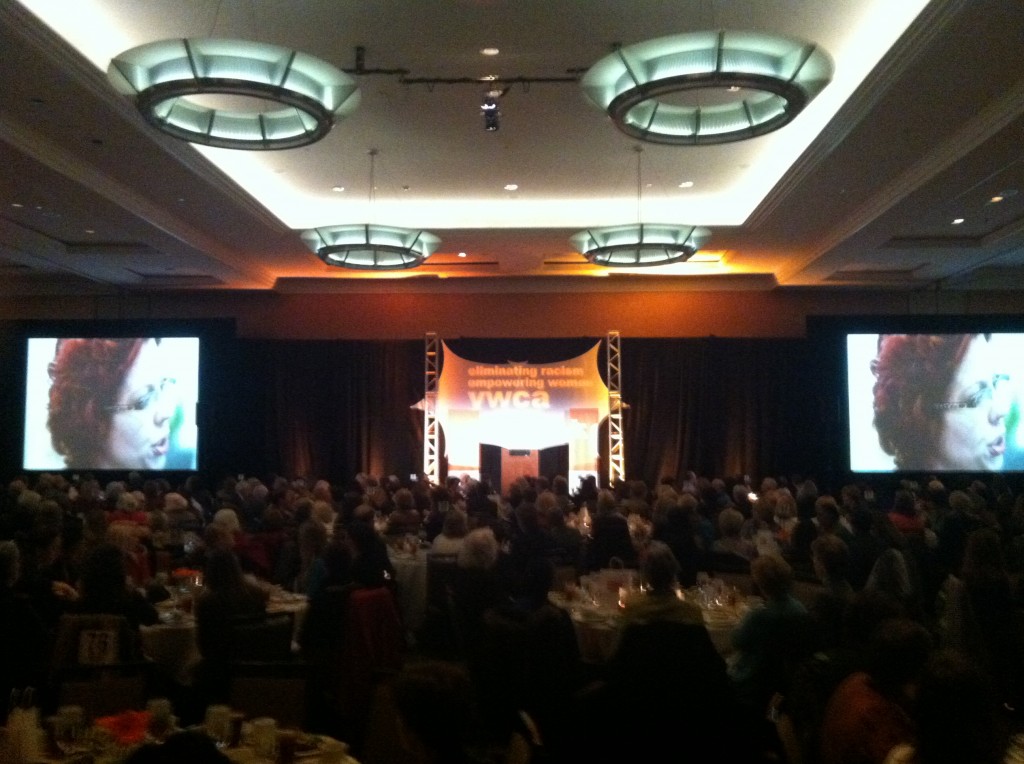
The video played to an audience of 800 people at the Westin Charlotte on February 19, 2013 and is available for viewing on the YWCA Central Carolinas’ website.
2013 ‘We Believe’ Luncheon video playing at the Westin Charlotte
Daniel Day Lewis, Jennifer Lawrence, Anne Hathaway and Christoph Waltz at the 85th Academy Awards
For the first time in my life, I saw every movie that was nominated for Best Picture by the Academy Awards before the ceremony aired on television. That said, I didn’t see all of the movies that were nominated, so I will limit my picks to the categories of which I’ve seen at least the majority of the nominations.
Best Picture:
Silver Linings Playbook – Best movie I’ve seen in a long time. At no point was I bored. I cannot say that for any of the other films that were nominated.
Best Actor in a Leading Role:
Joaquin Phoenix for The Master – Philip Seymour Hoffman and Joaquin Phoenix in The Master is one of the finest acting pairings in the history of cinema. Period.
Best Actress in a Leading Role:
Jennifer Lawrence for Silver Linings Playbook – Kudos to the Academy for awarding Jennifer Lawrence her first Oscar – well deserved.
Best Actor in a Supporting Role:
Philip Seymour Hoffman for The Master – Please refer to my comment in the Best Actor category. I didn’t stutter.
Best Actress in a Supporting Role:
Anne Hathaway for Les Misérables – Anne Hathaway goes HAM in Les Mis. She couldn’t not win this one.
Best Cinematography:
Claudio Miranda for Life of Pi – Again, a no-brainer. The only possible rival in this category was Beasts of the Southern Wild, which unfortunately took home ZERO awards.
Best Directing:
David O. Russell for Silver Linings Playbook – Since the director is responsible for all the parts of a film, I personally believe that the director of the Best Picture should win for Best Directing, hence my choice for David O. Russell.
Film Editing:
Jay Cassidy and Crispin Struthers for Silver Linings Playbook – I could write an entire post about the editing in Silver Linings Playbook. It’s exquisite and a huge part of what makes this particular movie so wonderful.
Best Music (Original Score):
Mychael Danna for Life of Pi – I don’t really have much of an opinion in this category, so I’ll trust the Academy on this one.
Best Music (Original Song):
Adele Adkins and Paul Epworth for Skyfall – Adele kills it on “Skyfall.” But beyond her performance, I just wanted her to win an Oscar.
Production Design:
Alex DiGerlando for Beasts of the Southern Wild – Though it wasn’t nominated in this category, the production design in Beasts of the Southern Wild is a triumph. It’s a pity it wasn’t even nominated.
Sound Editing:
Paul N.J. Ottosson for Zero Dark Thirty – I didn’t like the movie all that much, but director Kathryn Bigelow is known for her terrific use of sound, and Zero Dark Thirty is no exception.
Sound Mixing:
Andy Nelson, Mark Paterson and Simon Hayes for Les Misérables – They recorded the singing live, ya’ll. LIVE!!!!
Visual Effects:
Bill Westenhofer, Guillaume Rocheron, Erik-Jan De Boer and Donald R. Elliott for Life of Pi – The only possible contender in this category was Beasts of the Southern Wild, which wasn’t nominated…again.
Best Writing (Adapted Screenplay):
Tony Kushner for Lincoln – I wasn’t a big fan of Lincoln either, but I can appreciate the writing, which is exceptional and true to the time period.
Best Writing (Original Screenplay):
Wes Anderson and Roman Coppola for Moonrise Kingdom – That Moonrise Kingdom was only nominated for Best Writing is a travesty. The Academy could’ve at least thrown Wes Anderson a bone in this category, considering he’s NEVER won an Oscar. The man has contributed too much to American cinema to be snubbed this much.
I was first introduced to the Charlotte hip hop collective, Forever FC, at a J. Cole concert I went to last year. At one point during his show, Cole said to the audience that we should keep our ears to the ground for a rapper from Charlotte named Lute. Once I got over the embarrassment of J. Cole knowing about an artist from my city before I did, I Googled Lute and found that he is but one of a set of artists (rappers, producers, designers, photographers, videographers and stylists) who make up the collective, Forever FC.
I was initially struck by the professional look and sound of the group’s work. From the design of their mixtape covers to the quality of their mixes, photographs and videos, they seemed to run their operation more like an indie record label than an emerging rap group.
When I first reached out to Forever FC, I was working on the Charlotte Video Project. We ended up producing two short documentary videos with them for the CVP – one on the group as a whole and one on one of Lute’s live performances. We eventually started talking about doing music videos together, and by the end of 2012 we decided to collaborate on visuals for two songs – “Queen City Slummin’” by Lute featuring Ry and “The Don’s Chant” by Schyler Chaise.
To start these two projects I began by asking Lute and Schyler what words and images came to mind when they thought about their respective songs.
Queen City Slummin’
Lute used words like “old,” “poor” and “country” to describe his song. He imagined the video being filmed in black and white and wanted to feature an old car somehow. He pointed to the film Hustle & Flow and Common’s music video for “The Corner” as examples of a feel that he’d like to work toward.
With that in mind, I went to a trailer park that I’d passed dozens of times leaving high school in Huntersville, NC. I snapped some photos of a few locations and sent them to Lute. He responded, “This is perfect.”
Location photo for “Queen City Slummin’”
For the car, a friend lent us an old Chevy Caprice, and the story pretty easily fell into place thereafter: Lute drives the car, rapping to himself behind the wheel and picks up Ry who jumps in midway through the song to rap his verse. I cut that story in with a few shots of Lute and Ry rapping to the camera in the various locations that we’d identified beforehand, and that became the video for “Queen City Slummin’.”
This video was meant to achieve an aesthetic – an early 90s feel reminiscent of Tribe Called Quest and early Nas, but with “The Don’s Chant,” we aimed for a more narrative-driven concept.
The Don’s Chant
Schyler’s video took a bit longer to conceptualize. He’d said that he wanted to work with a red, black and gold color scheme and used words like “grunge,” “dark” and “women” when describing what the song meant to him.
I’d seen the cover art for the song, which features an old photo of boxer Mike Tyson with his infamous promoter Don King. This seemed like something interesting to build upon. Because “The Don” usually refers to Don Corleone – not Don King – this concept would turn the traditional meaning of “The Don” on its head.
I started to do some research on Don King and came across a clip on YouTube of an interview he did with Chris Rock on the Chris Rock Show. In the interview, Rock asks King what exactly his job entails, and King launches into this wonderful little monologue in which he likens his work to that of John the Baptist. I had never seen Don King talk about his own work like this before and decided to start the video with this clip. The interview clip establishes this Don and not the other (more common) Don as well as boxing as a theme.
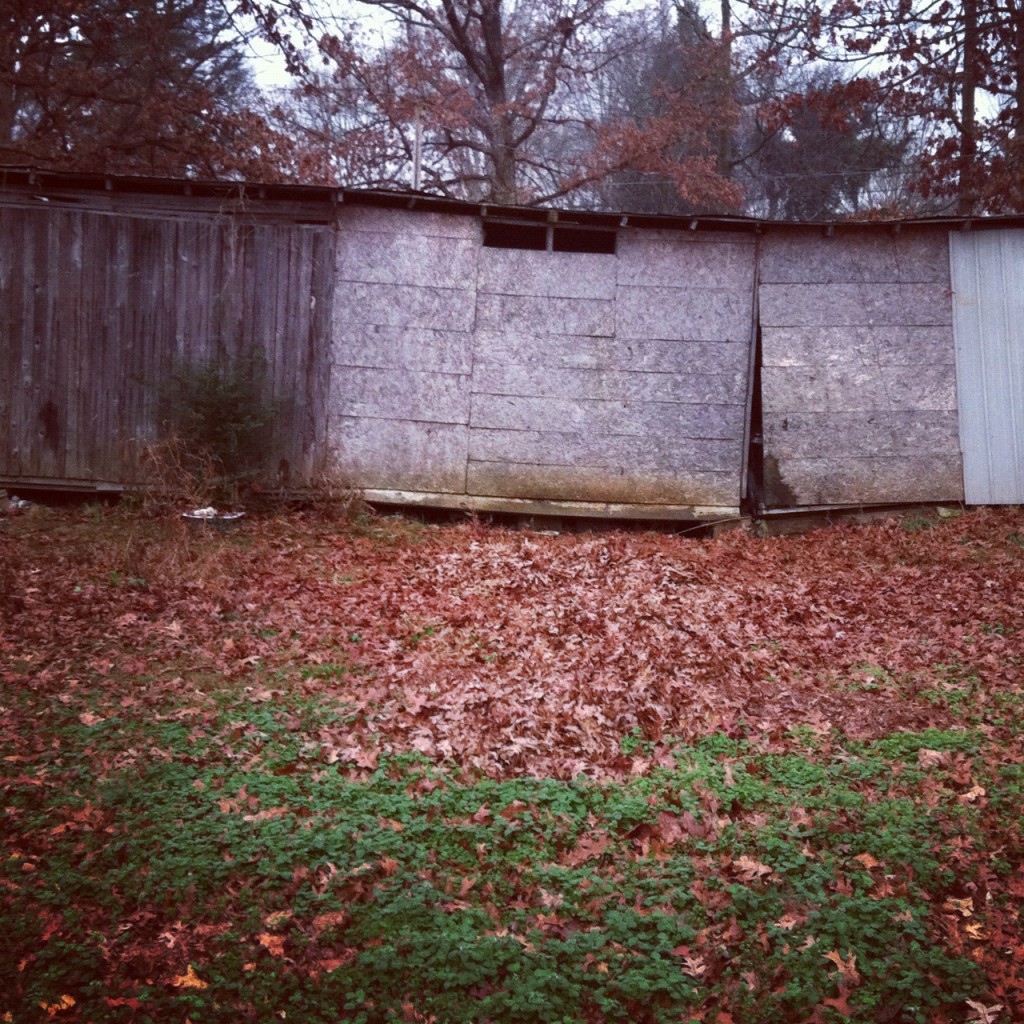
Location photo for “The Don’s Chant”
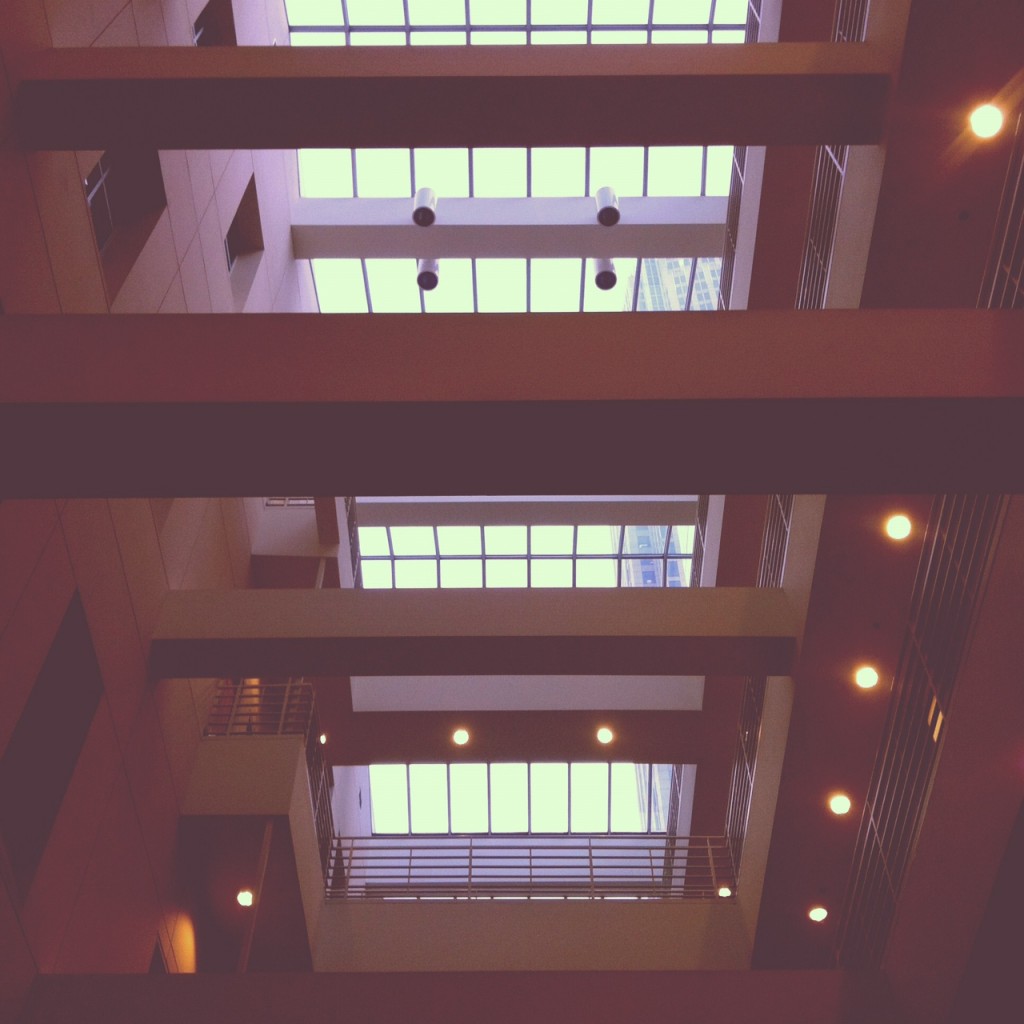
The overall look that we decided on was largely influenced by a location that I’d stumbled across in Downtown Charlotte – a stunningly geometric atrium in a condominium building. It looked like the inside of a deserted cruise ship. I sent Schyler a picture. “I’m digging it,” he said.
The story came to be about Schyler’s character playing out a portion of what Don King describes in his interview. This character – who is somehow involved in the boxing industry – retrieves a briefcase (presumably full of cash) from an associate and delivers it to a boxer. However, the contents of the case are never explained, which makes for an overall ambiguous narrative. What’s in the case? Is this a dream sequence? A trailer for a larger film?
Who knows?
Overall I had a blast working with the Forever FC family on these projects, and I look forward to more collaborations like these in the future!
Last night I went to see Zero Dark Thirty during the Super Bowl. It turned out to be a great decision because hardly anyone was at the theater, and thanks to the good folks at the Internet I got to watch the two best things about the big game – the commercials and Beyonce’s performance – at my leisure.
The Super Bowl is no doubt a field day for the advertisers that plunge into the land of Super Bowl campaigns – especially now that their content has legs after (and before) it airs on television for $133,333 a second. Clearly it’s worth it, though, considering the 2012 Super Bowl reached nearly twice as many viewers as the second most-watched sporting event of last year – the NFC Championship.
All of the most popular commercials were at least beautifully made and at most works of brilliance. I was personally drawn to the more absurd ones – namely Doritos’ “Goat 4 Sale” and Oreo’s “Whisper Fight.” And though I’ve historically found Budweiser Clydesdale commercials to fall flat, I think their “Brotherhood” ad was the best dramatic spot of the broadcast:
Perhaps more fascinating was the level of interactive opportunities that brands nimbly snatched. Moments after the Superdome went (partially) dark during halftime, for instance, some advertisers paid to promote their tweets on search results pages related to the power outage. Tide and Oreo even managed to capitalize on some free advertising, posting clever photos about the outage mere minutes afterward on Twitter.
There was still, of course, bountiful traditional advertising (i.e. The Lone Ranger‘s pre-game show, Pepsi’s halftime show and Toyota’s post-game show). Incidentally, Beyonce’s halftime performance was great – particularly the use of multimedia screens during her show – excuse me, Pepsi’s show.
The advertising industry – on its quest to become truly omnipresent – continues to blur the line between art and commerce. We’ve all heard somebody say, “The commercials are the best part of the game,” but never have the two been so hard to differentiate.
Food blogger and activist, Vani Hari, writes for her own blog, foodbabe.com, where she discusses food policy, writes recipes and provides healthy lifestyle tips.
Hari updates her site frequently with content (usually a few times a week) – using mostly text and photography in her blog posts. Video is less common, but she has experimented with it intermittently. Prior to her hiring me, she’d uploaded 12 videos to her website, averaging about 4,500 views/video. Some of them are recordings of Hari’s guest appearances on news programs. The rest she produced herself and were shot on low end, consumer grade video cameras featuring no more than one or two shots edited together.
Adding High Quality Video and Storytelling to the Mix
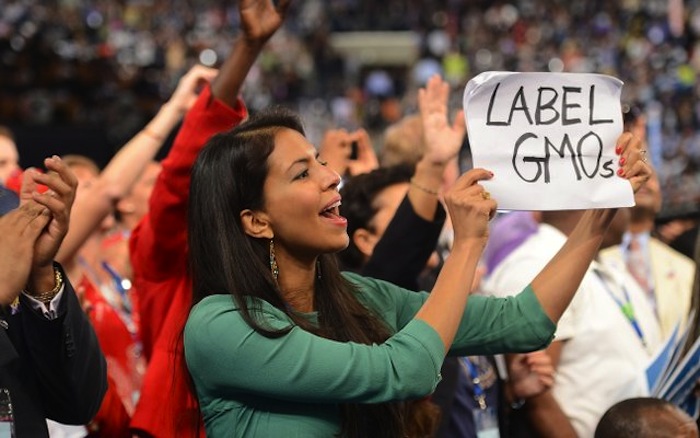
In addition to her blogging career, Hari was also a North Carolina delegate at the 2012 Democratic National Convention (DNC) in Charlotte. While she was carrying out her formal obligations during the convention, she also advocated for food policy reform, pressuring lawmakers to endorse legislation that would require food companies to label genetically modified organisms (GMO) on their packaging. To tell this story, she volunteered to allow a cinematographer to follow her around during the DNC to document her experience, and she hired me to assist in the development of the storyline and script as well as edit the footage to create her own video.
The narrative for the video included her experience at the DNC as well as a call to action for viewers to become involved in food advocacy, specifically by voting for or supporting Proposition 37 in California – a bill that would have required California food producers to label GMOs. She posted the video along with an article she wrote and photographs that she took at the DNC in a blog post titled “The United State of GMOs.”
Results
Because she already had a large following online, it wasn’t a surprise that the video quickly gained many views soon after she posted it. Less expected was how well the blog post (as a whole) would perform. The page (with the written article, photographs and video) has been “liked” over 4,000 times on Facebook – becoming one of the most popular posts on her blog. At the posting of this article, the video has 133 likes on YouTube – more than all of her other uploaded videos combined – and has been viewed 8,627 times.
Obviously a large part of the blog post’s success was because of Hari’s hard work building her audience. However, that it performed so much better than many of her other articles can be directly attributed to integrating high quality video production and storytelling into her presentation. The video is still on Hari’s homepage and continues to get steady views.